Is Your Business Ready for a Subscription Model? A Readiness Checklist
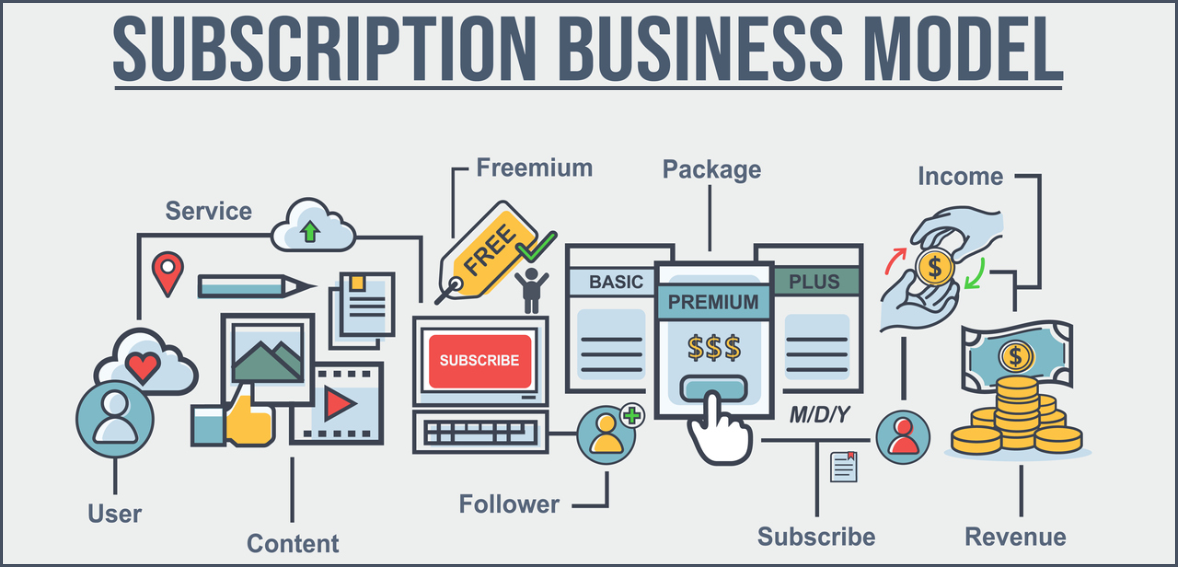
The subscription model, as opposed to single sales, has turned out to be the most efficient way for companies to get a steady income that is easy to predict, keep customers for a longer time, and scale up operations well. By putting customer relationships at the heart of a subscription business model, organizations constantly provide value and, at the same time, create loyalty for the long run.
Nevertheless, a movement to subscriptions is not just a change in the pricing; it demands organization-wide strategic planning, financial strength, and operational readiness throughout the company. This tutorial not only guides you through the process of determining whether your company can cope with a subscription model but also gives you a clear, easy-to-follow checklist comprising the main abilities needed for a triumphant transition. Every part of the guide points out a key success factor that has a direct effect on customer retention, profitability, and satisfaction.
If your goal is to create a sustainable recurring income plan backed by a robust subscription pricing strategy, then these checkpoints will assist you in avoiding the most common industry traps, lessening the risk, and ultimately becoming a confident, well-informed decision maker with long-term growth in mind.
Understanding the Subscription Model and Its Core Requirements
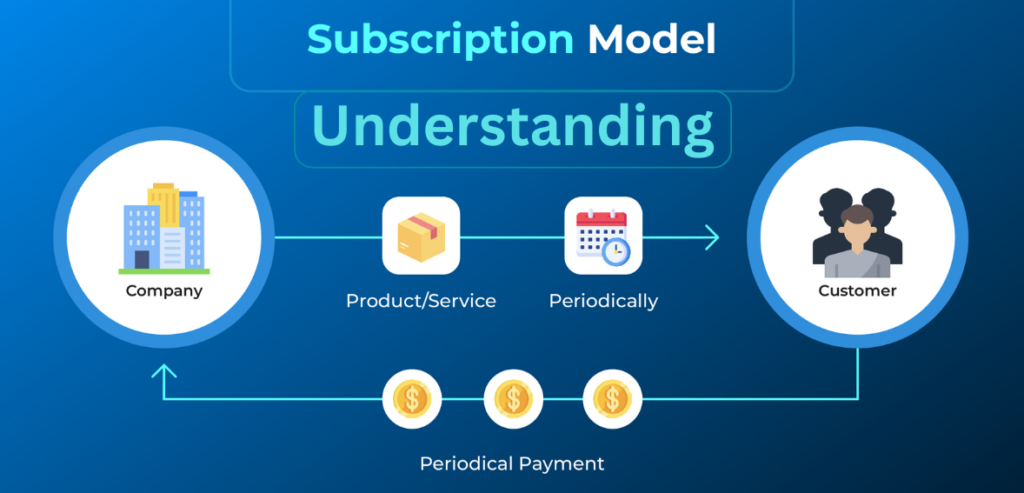
A subscription model that works well is the one that keeps on giving value and not just the one-time transactions. Customers sign up mainly because of the benefits, convenience, and trust that the service will always be there. The companies need to think of selling the goods no longer but rather managing the customer relationships over the long term.
The subscription model necessitates the following:
- Customers’ constant engagement.
- Improvements in products or services.
- Clear communication of value that is still being offered.
In contrast to the sales of goods sold to customers, the subscription model only recognizes revenue after a specified time period gained from the customers. Thus, customer retention is more critical than customer acquisition. A recurring revenue model with a strong foundation relies on customers to continue their subscription each month.
Your pricing strategy for subscriptions should correspond to how frequently customers perceive value. If the value delivery is not uniform or is not communicated properly, churn will rise quickly. Knowing these basics is very crucial before adopting the subscription model.
Evaluating Product or Service Fit for a Subscription Model
Not all products and services can be offered under a subscription model. The candidates having the strongest traits for the subscription model are those who either keep on needing the service or support, or who keep on consuming the product, or require updates. One of the indications of the highest readiness is the product fit.
A subscription-based small business model that is good usually consists of:
- Customer interaction that is ongoing or repeated usage.
- Updates or improvements that are continuous.
- Results that take a long time for the customer to achieve, rather than instant results.
If the buyers can get the maximum value from one-time purchases, then subscriptions will seem like an imposition. Nevertheless, if your proposition is evolving, then a recurring revenue strategy is the right move.
Your pricing strategy for subscriptions should show how often customers get the value. Monthly billing is best for high customer engagement, while annual plans are appropriate for strategic or professional services. Good product fit lowers churn and secures success for long-term subscriptions.
Assessing Customer Demand for a Subscription Model
The success or failure of a subscription model is solely dependent on the customer’s willingness. Even businesses with operational strength face difficulties if the customers do not want to make recurring commitments. Demand can be tracked through the following indicators:
- Customers buying or renewing their items repeatedly.
- Customers needing constant support or maintenance.
- It’s common for clients to move toward the option of packaged services or extended arrangements.
The usage of community exploration, questionnaires, and trial runs can ascertain consumer interest before the large-scale introduction. The subscription model should clearly articulate its message by highlighting key advantages, such as ease of use, cost savings, and access to premium features, concisely.
Recurring revenue strategies are only beneficial when the customer feels that the subscription has rather simplified the experience than taken away the flexibility. Thus, your subscription pricing strategy should mainly focus on value, transparency, and trust to encourage adoption in the customer.
Financial Readiness for Implementing a Subscription Model
Shifting to a subscription-based model necessitates complete financial preparedness along with long-term strategic planning. In the beginning, cash flow might be restricted since the revenue is coming in gradually instead of all at once. A company’s financial soundness and forecasting power are usually put to the test during this transitional phase.
In more detail, firms should get ready to deal with:
- Revenue recognition that is delayed.
- Customer acquisition costs are higher at the beginning.
- Customer support expenses that are ongoing and increased.
The backbone of a robust recurring revenue strategy is the grasping of the major subscription metrics like Monthly Recurring Revenue (MRR), churn rate, and Customer Lifetime Value (CLV). Financial forecasting, in turn, becomes unreliable and risky if there is no proper tracking of these metrics.
The subscription model should be backed up with cash reserves and growth expectations that are not overly optimistic. That is why revenue from the subscription model should be accompanied by cash reserves and growth expectations that are not overly optimistic. Through the adoption of strict financial controls, the subscription pricing strategy will remain profitable even as the number of subscribers grows and operating costs increase.
Designing a Sustainable Subscription Pricing Strategy
An appropriate and well-thought-out subscription pricing strategy is of utmost importance for the company’s long-term stability as well as for the retention of its customers. In other words, pricing has to be very carefully balanced between the customer being able to afford it and the business being able to sustain itself while clearly showing the value of the product.
The most common features of the effective subscription pricing tactics are as follows:
- Plans with different tiers that are designed for different customer groups.
- Pricing options based on features or on the amount of usage.
- Clearly defined and easy to follow upgrade and downgrade paths.
Most importantly, transparency builds a fortress of trust among the clientele and also simplifies their communication with the firm. It is a requirement for the customers to have an unambiguous picture of what they are being charged for, what is covered, and what might be the price changes in the future. Inflexible pricing schemes may create a situation where you are stuck with a non-profitable client (or no client at all), restrict operations, and more often than not, lead to customer churn.
Your subscription business model should permit pricing alterations in accordance with the customer’s behavior, usage data, and market shifts. Periodic pricing reviews not only help in making recurring revenue streams stronger but also in attaining customer loyalty and supporting growth that is scalable.
Technology and Billing Systems Supporting a Subscription Model
Every scalable subscription model relies on technology at the very heart of it. The future of subscription growth depends on an increase in the number of subscribers. Billing and payment tracking through human efforts becomes inefficient, time-consuming, and very likely to lead to costly mistakes. Moreover, in the absence of automation, even very small issues in billing can result in loss of revenue and unhappy customers.
The capacities mentioned below are essential for the systems you use:
- Recurring billing that is automated.
- Retrying payments and notifying customers.
- Upgrading, downgrading, and cancelling plans with ease.
Integration with CRM, accounting, and analytics platforms without any hassle is a must for efficient management of a subscription business model. A weak or disconnected infrastructure not only results in loss of revenue but also harms customer trust and satisfaction.
To have a tech stack that is both reliable and transparent ensures that your recurring revenue strategy is precise, expandable, and eco-friendly. The most brilliantly concocted subscription pricing strategy will not be able to perform well at all if there is no strong technical support.
Customer Support and Retention in a Subscription Model
Retention is the core aspect of a successful subscription model. Support of high-quality and well-organized customer success programs is the main factor in reducing churn and increasing customer lifetime value over the long run.
The support focusing on subscription usually involves:
- Well-organized onboarding procedures.
- Proactive interaction and frequent check-ins.
- Ongoing education and counselling on product or service usage.
In contrast to transactional businesses that are concerned only with one-time interactions, subscription companies have to prove their worth constantly. The success of a subscription model lies in the fact that customers are able to meet their needs and feel supported throughout their journey.
A strategy of recurring revenue relies more on the retention of existing customers than on the constant acquisition of new ones. Money spent on customer success will gain you trust, loyalty, and eventual profitability in the long run.
Marketing Alignment for Long-Term Subscription Model Growth
Among the significant characteristics of subscription-based sales as compared to traditional sales is that they rely a lot on customer behavior changes and, hence of marketing being a more strategic and continuous player. Marketing efforts are no longer directed to quick conversions but rather to long-term engagement, relationship care, and value positioning throughout the customer lifecycle.
By the marketing efforts that last, are effective, and result in UPI growth, the core points are:
- Always providing value along with results that can be measured.
- Gaining trust, honesty, and transparency in communication.
- Training, onboarding, and supporting the new users.
Free trials, demos, and content-driven campaigns help prospects to have a clear understanding of the benefits of a subscription before they make their decision. A solid and recurring revenue model lures customers with similar long-term acceptance. Consistent marketing of the subscription offered should support the pricing strategy in order to keep the expectations aligned and to minimize the early-stage churn.
Organizational and Operational Readiness for a Subscription Model
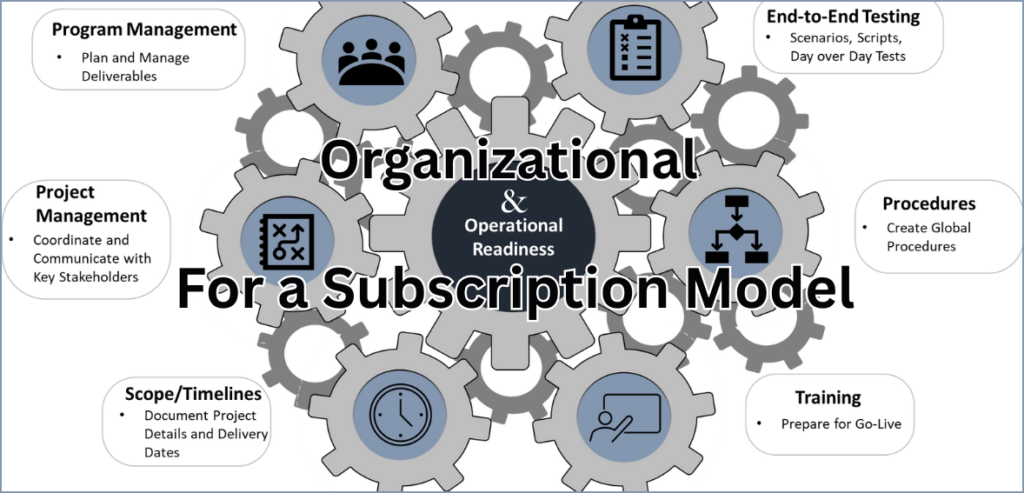
A subscription model entails alignment across the entire organization. One of the key features of leadership is the ability to focus on customer retention and lifetime value rather than on short-term revenue wins.
Operational readiness consists of the following components:
- Improve product marketing strategy.
- Come up with satisfactory customer service.
- A supportive customer-base orientation.
In order to support the subscription business model, sales, support, finance, and product teams need to work together very closely. The absence of collaboration between different departments negatively impacts the recurring revenue strategy and consequently, customer experience as well.
Cultural alignment helps people in all departments to be on the same page when it comes to the subscription pricing strategy and long-term growth.
Conclusion
A subscription model can give your business predictable revenue, improved customer relationships, and growth opportunities that are scalable, but this will only happen if your company is really ready for it. This checklist of readiness points outlines the most vital strategic, financial, and operational factors that will have a strong influence on long-term success.
The best subscription model for a business is based on real customer demand, careful financial planning, a subscription pricing strategy that is easy to understand and clearly reflects value, and dependable technology that can be easily scaled. When these aspects come together with a retention-oriented recurring revenue strategy, subscriptions turn out to be a really powerful long-term growth generator that compounds steadily over time and also contributes to the stability of the whole business.
Make sure to fix any issues you find or improve any areas before you launch. It is preparation—not speed—that determines the subscription success, sustainability, and long-term profitability.
FAQs
What exactly is a subscription model?
A subscription model is the arrangement whereby customers are able to pay periodic fees for indefinite usage of a product or service instead of having to buy it outright once.
How will I know if my business is suitable for a subscription model?
If your business is able to provide ongoing value, has a constant demand, and is capable of keeping customers for a long period, it is then suitable for a subscription model.
What is the main obstacle in a subscription model?
The main obstacle in a subscription model is to reduce customer turnover while still offering the same value to the customers consistently.
What is the sign of a great subscription pricing strategy?
A great subscription pricing strategy is communicated clearly, offers different levels of commitment, and is in line with the frequency of the customer getting value.
What is the importance of bringing in retention into the subscription model?
In light of the meaning of instance objects of causation within the subscription model, entry of retention holds importance for growth in subscription monies.